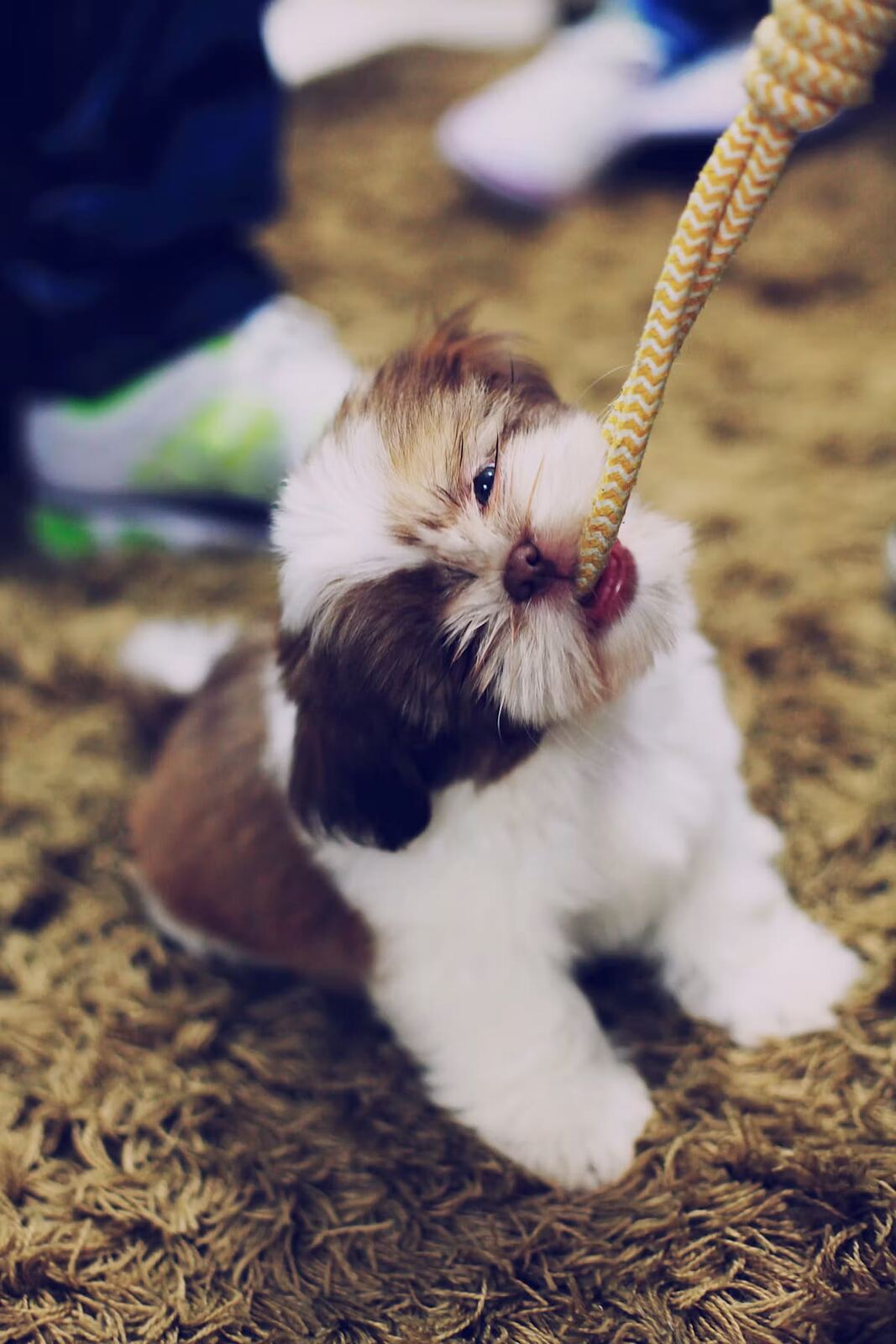
How to Stop a Puppy From Biting
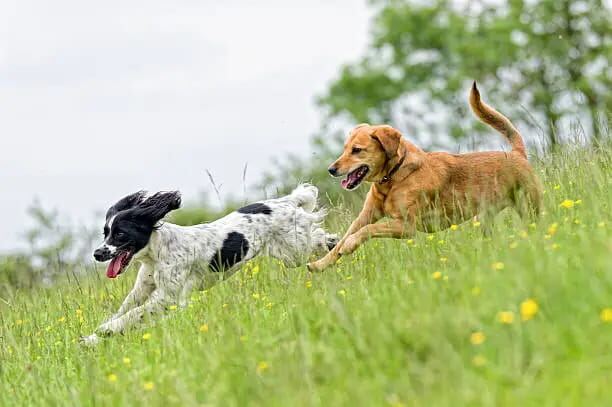
Your puppy is not aggressive. That needle-sharp mouth attached to your hand every five minutes? That's just how puppies are — technically it's "mouthing," not biting, and almost every single one does it. They explore the world mouth-first the way a toddler explores with their hands, and it's also just how they used to play with their littermates. You're not trying to erase the instinct — you're teaching them what's okay to bite, and how gently.
Three reasons it's happening
- Teething. Between roughly 3 and 6 months, sore gums make chewing genuinely relieving.
- Play. Mouthing was how they wrestled and communicated with littermates — it's a default play behavior, not misbehavior.
- Overstimulation or overtiredness. A lot of "out of nowhere" biting spikes happen when a puppy is overtired, in what many owners call the "witching hour."
Teach it the way littermates did
Here's how puppies actually learn "too hard": another puppy yelps and stops playing. Simple, immediate, unmistakable. You can be that feedback loop:
- The moment teeth touch skin too hard, give a short, sharp "ow!" — not a scream, just enough to interrupt.
- Immediately stop all interaction for 10–15 seconds. Turn away, remove your hand, disengage.
- Resume play calmly. If the biting happens again, repeat — consistency matters more than intensity.
Give them something better to bite
Stopping the bite is only half the job — you need a "yes" to go with every "no." Keep a soft toy or rope nearby during play, and the second you interrupt a bite on skin, swap in the toy. If teething is the culprit, a chilled (not frozen) rubber chew often does the trick.
Set the stage so it happens less
Bite inhibition doesn't click overnight — it takes weeks. In the meantime, a few things help a lot:
- Watch for early signs of overtiredness and start winding things down before the "witching hour" hits.
- Keep play sessions short and structured. Long free-for-alls tend to spiral into more biting, not less.
- Make sure they're getting enough exercise, physical and mental. An under-stimulated puppy bites more, not less — it's often an energy problem wearing a training-problem costume.
When it's not just puppy stuff anymore
Most puppies get noticeably better within 4 to 8 weeks of consistent redirection. If you're seeing growling, stiff body language, or it feels more like fear than play — or nothing's improved by around 6 months — that's the point to bring in a certified trainer or veterinary behaviorist instead of continuing to handle it solo.